Updates:Hello Aspirants, Admissions are Open For Spring & Fall 2026 Intakes Read More
- Hyderabad, INDIA
- info@yesoverseascareers.com
- Monday _ Saturday: 10.00 AM to 06.30 PM


3 Columns - Yes Overseas Careers
17Nov


Study in Europe – Best Consultancy in Hyderabad
Europe Education Fair 2025–26: Study in Top Schengen Countries With Low Fees & High Visa Success – Join Us on 28th November Europe is now the No.1 destination for Indian students seeking affordable fees, high-quality education, post-study work rights, and dependents visa options. To help students understand all opportunities across Schengen and European Union countries, Yes Overseas Careers is hosting an exclusive Europe Education Fair on 28th November 2025, from 2 PM onwards. This fair is the perfect platform for students from Andhra Pradesh and Telangana who are planning for 2025–26 intakes and want clarity on admissions, scholarships, internships, and visa guidance. Why Attend the Europe Education Fair 2025–26? Students planning for Bachelor’s, Master’s, MBA, MIM, Engineering, IT, Healthcare, Business, Fashion & Design can benefit greatly from this event. Key Benefits of Studying in Schengen & European Countries MOI Accepted – No IELTS required in many institutions Educational Gaps Accepted – After Intermediate & Graduation Affordable Tuition Fees – Starting from just ₹7 Lakhs per year Paid Internships – Up to €1000/month depending on program and location Dependents Allowed – Spouse & children can join in many countries 2 + 5 Years Visa Options – Long-term study, work & residency pathways Easy Schengen Mobility – Travel across 26+ European countries What to Expect at the Europe Education Fair? At the event, students can interact one-on-one with experienced Europe counsellors and get personalised guidance for: Admissions & Application Support Course shortlisting based on your profile University selection across Schengen region Step-by-step help with applications Scholarships, fee waivers & financial guidance Visa Process & Eligibility Complete explanation of Schengen student visa rules Required financial documents Dependents visa eligibility Part-time work regulations Post-study work rights Education Benefits in Schengen & European Countries Globally recognised degrees Modern campuses & industry links Work-study balance Internship placements in top companies Safe, multicultural environment Event Details 📅 Date: 28th November 2025 ⏰ Time: 2 PM onwards 📍 Venue: Yes Overseas Careers, Hyderabad 📞 Contact: 9030777195 / 9030777198 🔗 Registration: click here to get registered and reserve your place for the event 🌐 Website: https://yesoverseascareers.com/ Who Should Attend This Fair? This event is perfect for: Students completing Inter (BiPC, MPC, MEC, CEC) Students completing Diploma / Degree / B.Tech / B.Pharm / Nursing / B.Com / BBA / BA Working professionals seeking Masters in Europe Students confused about finances, eligibility, or country selection Parents seeking accurate information for their children’s future Benefits of Choosing Europe for Higher Education Affordable Education Compared to other countries, Europe offers low tuition fees with high-quality education systems. Strong Post-Study Work Options Many Schengen countries provide 1–2 years of post-study work rights with opportunities to extend your stay. Opportunities for Dependents Spouse and children can accompany the student in multiple European destinations, ensuring family support. High Job Prospects Growing demand in: Information Technology Engineering Healthcare & Nursing AI & Data Science Finance & Management Tourism & Hospitality Creative fields like Fashion & Design Useful links for students’ reference Schengen Visa Info – https://www.schengenvisainfo.com/ EU Immigration Portal – https://immigration-portal.ec.europa.eu/ European Higher Education Area – https://www.ehea.info/ To know more about abroad studies, visit our website: Yes Overseas Careers
05Nov
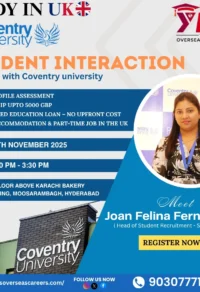
Coventry University Student Interaction Event – Study in the UK 2026
Coventry University Student Interaction Event – Study in the UK 2026 Are you planning to study in the UK for your higher education?Here’s your chance to meet Coventry University — one of the Top 50 UK universities — right here in Hyderabad!Yes Overseas Careers invites all aspiring students for an exclusive Student Interaction Session with Coventry University on 12th November 2025 at our Musarambagh office.This interactive event gives you a golden opportunity to connect directly with university delegates and learn about courses, scholarships, and post-study work opportunities in the UK. Event Details 📅 Date: 12th November 2025⏰ Time: 2:00 PM – 3:30 PM📍 Venue: Yes Overseas Careers, 1st Floor, Above Karachi Bakery Building, Moosarambagh, Hyderabad 🎓 Guest Representative:Ms. Joan Felina FernandezHead of Student Recruitment – South Asia, Coventry University Why Attend This Session? This event is specially organized for Indian students planning to study in the UK for the 2025 intake. During the session, students can get on-spot profile assessments, explore scholarship options, and understand how to secure admission to Coventry University through Yes Overseas Careers. Key Benefits of Attending ✅ On-spot profile evaluation by Coventry University representative 🎯 Scholarships up to £5000 GBP for eligible students 💰 100% assured education loan – no upfront cost 🏠 Assistance for accommodation and part-time jobs in the UK 📚 Free expert guidance on courses, visa process, and post-study work options 💬 Don’t miss this chance to get personalized guidance directly from Coventry University’s official representative. About Coventry University Located in the heart of England, Coventry University is one of the UK’s fastest-growing and most respected universities. It offers industry-focused programs, world-class research opportunities, and a vibrant international student community. Highlights Ranked among the Top 50 UK Universities (Guardian 2025) 97% graduate employability within 6 months Flexible placement year programs 2-year post-study work visa for international students Coventry’s modern campus, global outlook, and student-centered learning environment make it an ideal choice for Indian students aiming for international success. Why Apply Through Yes Overseas Careers Yes Overseas Careers is an authorized representative of Coventry University in India.We provide end-to-end support — from choosing the right course to securing your visa — at no cost to the student. Our Services Include: 🎓 Free counselling & university application support 💰 Guaranteed scholarship guidance 💳 Assistance with education loans 🛂 Visa filing & interview preparation ✈️ Travel, accommodation, and part-time job assistance With a 100% visa success rate and personalized approach, Yes Overseas Careers has helped hundreds of students achieve their UK education dreams. How to Register for the Event 📱 Step 1: Visit www.yesoverseascareers.com📞 Step 2: Call or WhatsApp us at 9030777195 / 9030777198📝 Step 3: Fill out the quick registration form and confirm your slot 🎯 Seats are limited — early registration is highly recommended! This Coventry University Student Interaction Event is a must-attend for anyone planning to study in the UK. Whether you’re exploring postgraduate, undergraduate, or short-term programs, you’ll get direct insights from the university itself. Join us on 12th November 2025 at Yes Overseas Careers, Hyderabad, and take the first step toward your UK education dream. Start Your UK Journey Today!Apply now for 2026 postgraduate intakes!📞 Call/WhatsApp at 9030777195/198📍 Office: Musarambagh, HyderabadWHATSAPP
05Nov

Study at Aura Lyon France 2026 – Yes Overseas Careers
Study in France with Aura Lyon – Your Gateway to Global Education (2026 Admissions Open) Study in France with Aura Lyon – A Top Destination for Indian Students France is one of the most welcoming destinations for international education, and Aura Lyon is rapidly gaining attention as a hub for global learning, innovation, and career opportunities.Located in the vibrant city of Lyon, Aura Lyon offers an ideal combination of academic excellence, multicultural exposure, and affordability, making it a perfect choice for Indian students planning to pursue higher education abroad.Whether you’re aiming for a Master’s in Business, Management, Data Science, or Engineering, Aura Lyon provides world-class education aligned with global standards and future job trends. Why Choose Aura Lyon for Your Higher Education? Lyon is not just one of France’s most beautiful cities — it’s also a top academic and industrial hub known for its strong business network and innovation ecosystem. Aura Lyon takes full advantage of this location, offering students valuable exposure to global industries, research institutions, and career pathways. Key Advantages of Studying at Aura Lyon 🎓🎓 Globally recognized programs in business, management, technology, and design 🌍 English-taught courses, making it ideal for Indian students 💼 Industry internships and placement partnerships with leading European companies 💰 Affordable tuition fees and low cost of living compared to Paris or London ✈️ 2-year post-study work visa available after graduation 🏫 Located in Lyon, ranked among the Top 10 Student Cities in Europe (QS Rankings) Aura Lyon ensures that students receive hands-on practical exposure through internships, real-world projects, and international seminars — preparing them for both French and global job markets. Top Courses Offered at Aura Lyon Aura Lyon offers a wide range of programs that blend theoretical knowledge with practical application. Students can choose from several Bachelor’s and Master’s programs designed to meet the evolving needs of the global job market. Popular Postgraduate Courses Master in International Business & Management MSc in Marketing, Communication, and Luxury Management MSc in Data Science & Artificial Intelligence MSc in International Finance and Economics MSc in Engineering & Sustainable Development Bachelor’s Programs Bachelor in Business Administration (BBA) Bachelor in International Marketing Bachelor in Hospitality and Tourism Management 💡 Pro Tip: Many programs include a mandatory internship or research project, giving students valuable experience in European work environments. Tuition Fees, Scholarships & Cost of Living Affordable Education in France France is known for providing high-quality education at comparatively lower costs than other major study destinations. Aura Lyon maintains that tradition with transparent and accessible tuition structures. Tuition fees range between €7,000 – €12,000 per year (₹6.5 – ₹10.5 lakhs) depending on the program. Living expenses in Lyon average €800 – €1,000 per month, covering accommodation, food, and transportation. Scholarships for Indian Students Aura Lyon, in collaboration with Campus France and partner organizations, offers several scholarships for meritorious and financially deserving students. 🎓 Eiffel Excellence Scholarship (Government of France) 💶 Charpak Scholarship (by Campus France India) 🏆 Aura Merit Award for top-performing applicants 🌍 Erasmus+ Exchange Scholarships 💡 Note: Students applying through Yes Overseas Careers are eligible for personalized scholarship guidance and document support to improve their chances of securing financial aid. Life in Lyon – The Ideal Student City Lyon offers the perfect mix of academic energy, European culture, and career opportunities.As a UNESCO World Heritage City and France’s second-largest student hub, it provides a comfortable lifestyle at reasonable costs. 🏙️ Safe and student-friendly environment 🍴 Access to Indian restaurants and multicultural communities 🚇 Excellent public transport and international connectivity 🎭 Cultural festivals, arts, and music throughout the year Lyon’s balance between affordability and quality of life makes it ideal for Indian students adjusting to life in Europe. Post-Study Work Visa and Job Opportunities After completing their degree, Indian students can apply for a 2-year post-study work permit (APS Visa) to gain practical experience in France.Aura Lyon graduates are highly sought after by companies across Europe due to their practical learning exposure and strong communication skills. Top hiring sectors include: Information Technology & Data Science Finance & Consulting Luxury & Fashion Management Engineering & Sustainability Tourism & Hospitality Average salaries for postgraduates range between €35,000 to €50,000 per year, depending on specialization and experience. Apply Through Yes Overseas Careers Yes Overseas Careers, a trusted education consultancy based in Hyderabad, is an authorized representative for French universities, including Aura Lyon. We assist students with:✅ Course selection and university shortlisting✅ SOP and LOR drafting✅ Scholarship & visa application assistance✅ Education loan and accommodation support Our dedicated team ensures a smooth admission experience from India to France. Start Your French Journey Today!Apply now for France’s 2025 postgraduate intakes!📞 Call/WhatsApp at 9030777195📍 Office: Musarambagh, HyderabadWHATSAPP
04Nov

Study Post-Graduation in France – A Complete Guide for Indian Students (2025)
Study Post-Graduation in France for Indian Students – 2025 Guide France is fast becoming one of the most preferred study destinations for Indian students pursuing master’s degrees abroad. With globally ranked universities, affordable tuition fees, English-taught programs, and strong post-study work opportunities, France offers the perfect balance of academic excellence and cultural experience.If you’re planning your post-graduation in France, here’s everything you need to know about courses, scholarships, costs, and visa procedures. Why Choose France for Post-Graduation? France is home to some of the world’s top 100 universities and elite business and engineering schools. The French higher education system emphasizes research, innovation, and industry collaboration, making it ideal for master’s students. Top Reasons to Study in France 🎓 World-class education – globally recognized degrees 💶 Affordable tuition – lower than many other European countries 🌍 English-taught master’s programs available in most fields 💼 Strong job market – opportunities in business, tech, and engineering 🏆 Post-study work visa up to 2 years 🇫🇷 Rich culture & lifestyle – live and learn in one of the most student-friendly nations Top Universities in France for Indian Students France offers a mix of public universities and Grandes Écoles (specialized elite institutions) known for their academic excellence. Leading French Universities for Post-Graduation Aura International School of Management – offering world-class Management Programs Université Paris-Saclay – top for engineering, computer science & research Sorbonne University, Paris – world-renowned for humanities & sciences INSEAD & HEC Paris – best for MBA and management programs École Polytechnique (X) – premier institute for STEM courses Grenoble INP & CentraleSupélec – leading engineering schools University of Lyon & Toulouse – known for data science, IT, and business analytics Popular Postgraduate Courses MSc in Data Science / Artificial Intelligence MBA & Master in Management MSc in Engineering / Mechanical / Electrical Master in International Business / Marketing Master in Fashion & Luxury Brand Management Master in Environmental Science / Sustainability Tuition Fees, Scholarships & Cost of Living Tuition Fees Public Universities: €3,770 per year (approx. ₹3.4 lakhs) for master’s programs Private & Grandes Écoles: €10,000–€25,000 per year (₹9–₹22 lakhs) Many French universities offer English-taught programs without requiring French proficiency at admission. Scholarships for Indian Students Indian students can apply for numerous government and institutional scholarships, such as: 🇫🇷 Eiffel Excellence Scholarship (up to €1,200/month stipend) Charpak Scholarship (by Campus France) Raman-Charpak Fellowship for research students Erasmus+ Scholarships (joint master’s programs) University-specific merit grants through Yes Overseas Careers Cost of Living The average living cost in France ranges between €9,000–€12,000 per year (~₹8–₹10 lakhs), including accommodation, food, travel, and utilities.💡 Tip: Students can work up to 20 hours/week part-time during their studies. Admission Requirements for Post-Graduation in France Eligibility Criteria A Bachelor’s degree from a recognized universityMinimum 55–60% aggregate or equivalent GPAIELTS 6.0–6.5 or equivalent English proficiency (Almost all Universities and Programs accept MOI- Medium of Instruction is English)Strong Statement of Purpose (SOP) and Letter of Recommendation (LOR)Some programs may require a Skype interview or portfolio (for design courses) Documents Required Academic transcripts and degree certificates Passport copy Resume / CV SOP & LORs IELTS / TOEFL scorecard or Medium of Instruction (English) certificate University application form Post-Study Work Visa and Job Opportunities France allows international graduates to stay up to 2 years after completing a master’s degree to look for employment or start a business. Career Opportunities Graduates find roles in: IT, Data Analytics, and Artificial Intelligence Finance, Consulting, and Management Automotive & Aerospace Engineering Fashion, Luxury, and Hospitality Management Salary Range Average starting salaries for international graduates range from €35,000 to €50,000 per year, depending on the field and location. How to Apply for Post-Graduation in France Application Timeline September Intake (Main): Apply between November – April January Intake (Limited): Apply between June – October Step-by-Step Process Choose your university and program Prepare and submit online application Receive offer letter Pay tuition deposit Apply for France Student Visa (VLS-TS) Book flight and accommodation Why Apply Through Yes Overseas Careers ✅ Authorized representatives for top French universities✅ 100% assistance with applications, SOPs, and visa filing✅ Scholarship guidance and loan support✅ High visa success rate for Indian students✅ Personalized counseling for English-taught programsRead more about France education at our Blog Start Your French Journey Today!Apply now for France’s 2025 postgraduate intakes!📞 Call/WhatsApp at 9030777195📍 Office: Musarambagh, HyderabadWHATSAPP
03Nov

Courses Offered at Coventry University, UK – Scholarships, Tuition Fees & Living Costs
Why Choose Coventry University in the UK? Coventry University is one of the top-ranked universities in the UK, attracting thousands of international students every year. Known for its industry-aligned courses, career-focused education, and global learning environment, Coventry is an excellent choice for Indian students planning to study abroad in 2025.Let’s explore the courses offered, tuition fees, scholarships, and living costs at Coventry University. Courses Offered at Coventry University Undergraduate Courses Coventry offers globally recognized Bachelor’s degree programs across multiple disciplines. Some of the most popular undergraduate programs include: BSc Computer Science – Learn software development, data analytics, and emerging technologies like AI and cloud computing. BEng Mechanical Engineering – Develop a strong foundation in mechanics, design, and manufacturing. BA International Business Management – Gain an understanding of global trade, marketing, and entrepreneurship. BSc Nursing – Accredited program designed for those passionate about healthcare and patient service. BA Graphic Design – Focuses on creative design, branding, and digital communication. Postgraduate Courses Coventry University’s postgraduate programs are designed to build advanced knowledge and leadership skills for professional success. Popular master’s courses include: MSc Cyber Security – Focused on protecting digital systems and managing cyber risks. MSc Engineering Management – Perfect for engineers aspiring to move into management roles. MSc Data Science & AI – Learn to harness the power of big data and artificial intelligence. MBA Global Business – Develop strategic and leadership skills to manage international organizations. MSc Civil & Mechanical Engineering – Advanced program combining innovation, design, and sustainability. Choose a program with a placement year option to gain real-world work experience in UK industries — a major advantage for your career and PR pathway. Tuition Fees, Scholarships & Cost of Living Tuition Fees Coventry University tuition fees range between £18,000 – £20,500 per year depending on the course. Example Fee Range by Course Business & Management: £18,000/year Engineering & Technology: £19,500/year Health & Nursing: £20,000/year Data Science & Computing: £20,500/year These fees include access to modern labs, industry-standard software, and student support facilities. Scholarships To make international education more accessible, Coventry University provides a variety of scholarship opportunities for Indian students.💰 Guaranteed £5000 Scholarship – Exclusive for students applying through Yes Overseas Careers. 🏆 Merit-Based Scholarships – Additional awards for high academic achievers. 🌍 Country-Specific Discounts – Coventry offers regional scholarships for South Asian students based on performance. Living Expenses On average, students spend £9,000 – £11,000 per year on living costs (accommodation, food, travel, etc.).Students can work 20 hours per week during term time and full-time during vacations. What is the Placement Year? Coventry offers a unique Professional Placement Year as part of many undergraduate and postgraduate degrees.This allows students to work full-time in UK companies for one year and gain valuable industry experience. Career Support Coventry’s dedicated Talent Team helps students with:1. CV writing & interview preparation 2. Internship & job placement support 3. Employer networking and workshops 2-year Post-Study Work Visa (PSW) after course completion 100% education loan assistance through Yes Overseas Careers partners High visa success rate for Coventry University applicants PR pathway after 5 years of stay (study + work) in the UK 📅 Date: November 12, 2025📍 Venue: Yes Overseas Careers, Musarambagh, Hyderabad⏰ Time: 10:30 AM – 5:30 PM📞 Contact: +91 9030777195 / 9030777198🌐 Website: www.yesoverseascareers.com Get Expert Assistance 🎓 Apply through Yes Overseas Careers, an authorized representative of Coventry University in India.Our team provides free counselling, admission guidance, visa assistance, and loan support for aspiring students. 📞 Contact us today: +91 9030777195 / 9030777198🌐 Website: www.yesoverseascareers.com Register NowClick here and get in touch with one of our experts for further information.Register Now
01Nov
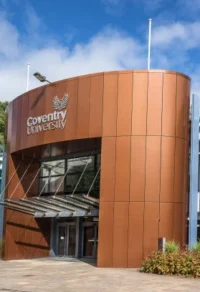
Study at Coventry University, UK – Top Choice for Indian Students in 2025
Why Choose Coventry University in the UK? Coventry University is a public research university located in the heart of England, known for its career-oriented education, international community, and exceptional placement record.It’s consistently ranked among the Top 50 Universities in the UK (Guardian University Guide 2025). For Indian students planning to study abroad, Coventry offers the perfect blend of affordability, academic excellence, and job opportunities. Courses Offered at Coventry University Undergraduate Courses Coventry offers globally recognized Bachelor’s programs in various disciplines: BSc Computer Science BEng Mechanical Engineering BA International Business Management BSc Nursing BA Graphic Design Postgraduate Courses Popular Master’s programs include: MSc Cyber Security MSc Engineering Management MSc Data Science & AI MBA Global Business MSc Civil & Mechanical Engineering 👉 Tip: Choose programs with a placement year option to gain real-world work experience in the UK. Tuition Fees, Scholarships & Cost of Living Tuition Fees Coventry University tuition fees range between £18,000 – £20,500 per year depending on the course. Scholarships Every student applying through Yes Overseas Careers gets a guaranteed £5000 scholarship.Additional merit-based scholarships are also available for high achievers. Living Expenses On average, students spend £9,000 – £11,000 per year on living costs (accommodation, food, travel, etc.).Students can work 20 hours per week during term time and full-time during vacations. Coventry University Placement Year & ROI What is the Placement Year? Coventry offers a unique Professional Placement Year as part of many undergraduate and postgraduate degrees.This allows students to work full-time in UK companies for one year and gain valuable industry experience. Career Support Coventry’s dedicated Talent Team helps students with:1. CV writing & interview preparation 2. Internship & job placement support 3. Employer networking and workshops 💡 Fact: Over 97% of Coventry graduates are employed or pursuing higher education within 6 months of graduation. Return on Investment (ROI) With strong placement support, scholarships, and part-time work, most students recover their entire investment within 1 year of employment. Student Life, Visa Support & PR Opportunities 2-year Post-Study Work Visa (PSW) after course completion 100% education loan assistance through Yes Overseas Careers partners High visa success rate for Coventry University applicants PR pathway after 5 years of stay (study + work) in the UK Eligibility Criteria for Indian Students Undergraduate Admission Minimum 55–60% in Class 12 (State/CBSE Boards)IELTS 6.0 overall (no band below 5.5) or English 65+ in Intermediate / MOI accepted Postgraduate Admission Bachelor’s degree with 50–55% aggregateIELTS 6.5 (no band below 5.5) or MOI acceptedBacklogs up to 15–18 accepted in many programs Meet Coventry University Delegates in Hyderabad! 🎯 Don’t miss the chance to meet Coventry University representatives in person! 📅 Date: November 12, 2025📍 Venue: Yes Overseas Careers, Musarambagh, Hyderabad⏰ Time: 10:30 AM – 5:30 PM📞 Contact: +91 9030777195 / 9030777198🌐 Website: www.yesoverseascareers.com Register NowClick here and get in touch with one of our experts for further information.Register Now